
Brought to you in collaboration with Orthofeet. We only partner with brands that reflect our values and standards, ensuring content that benefits you.
In this Article
The Contenders: What Sets These Women’s Walking Shoes ApartFoundation and Engineering
Convenience and Daily Usability
Credibility and Professional Endorsement
Financial Accessibility and Value Protection
Real-World Performance and Customer Satisfaction
The 5-Point Analysis: Where Each Brand Stands
How You Win With the Right Choice
Every morning, millions of women lace up shoes that will cause discomfort by lunch. Research indicates that foot discomfort affects a significant portion of the population, with women reporting higher rates of issues affecting the arch, heel, and ball of the foot. In fact, foot discomfort can impact mental health and overall quality of life for many individuals.
When searching for comfortable women’s walking shoes, most of us have faced the same frustrating choice: settle for athletic shoes that lack medical-grade support, or accept orthopedic shoes that scream “medical device.” What if there was a third option that didn’t require compromise?
After analyzing the most popular orthotic walking shoes for women across five critical categories, one brand consistently outperformed the competition. Here’s how the best orthotic walking shoes for women stack up when your comfort and daily routine matter most.
The Contenders: What Sets These Women’s Walking Shoes Apart
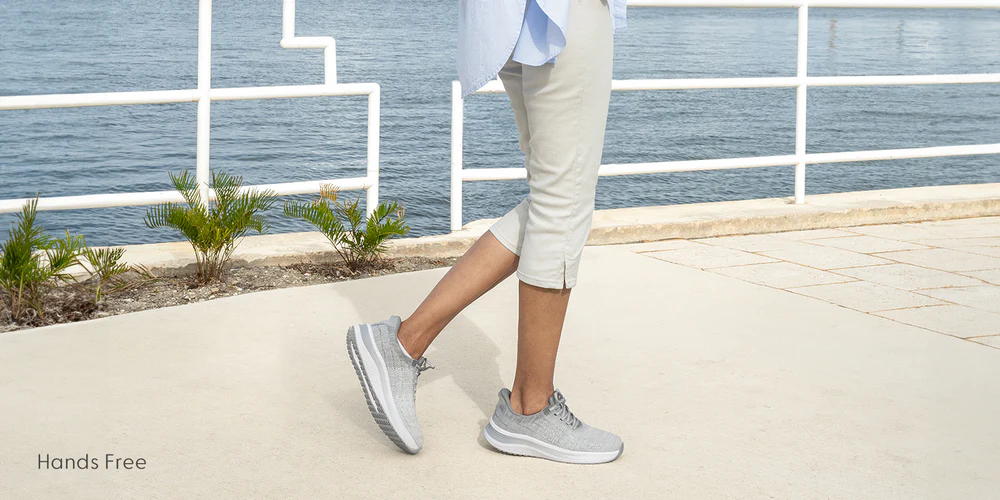
Before diving into the comparison points, here’s what makes the best walking shoes for women stand out from average athletic footwear:
- Support systems built into foundation construction
- Convenience features for daily ease
- Financial accessibility
- Podiatrist endorsements backed by clinical research
- Extended wear testing periods and real-world evaluation
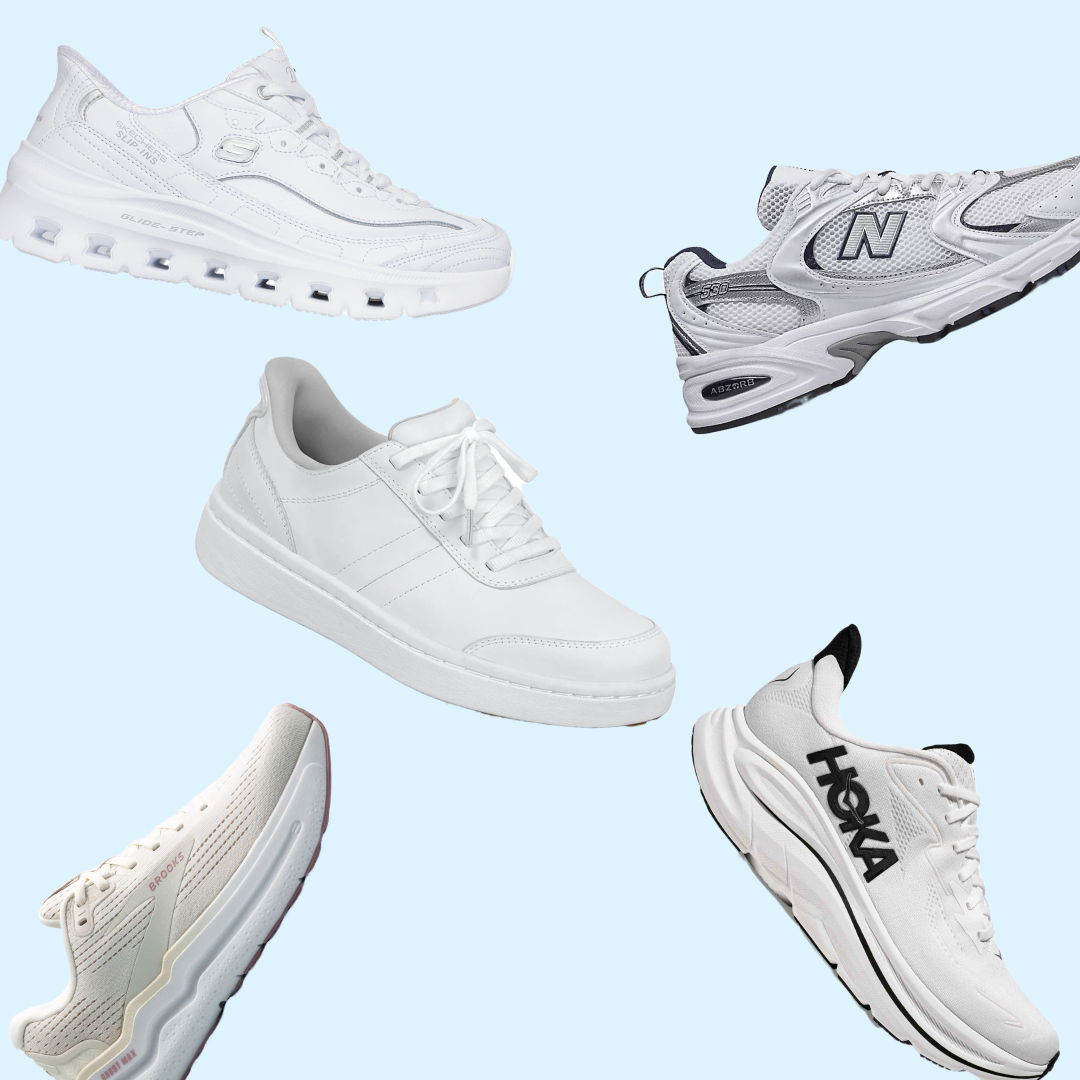
The five brands evaluated, including Orthofeet, Hoka, Brooks, New Balance, and Skechers, represent different approaches to foot comfort. Each targets women seeking all-day comfort, but their methods vary dramatically.
Foundation and Engineering
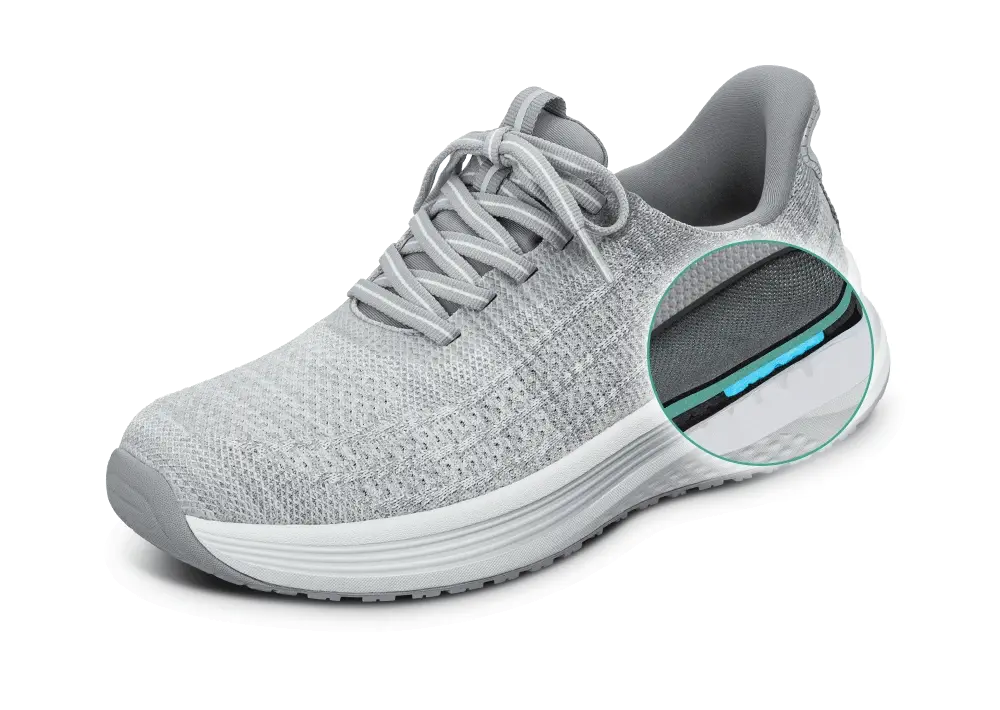
This category reveals the starkest differences between athletic marketing and biomedical engineering approaches.
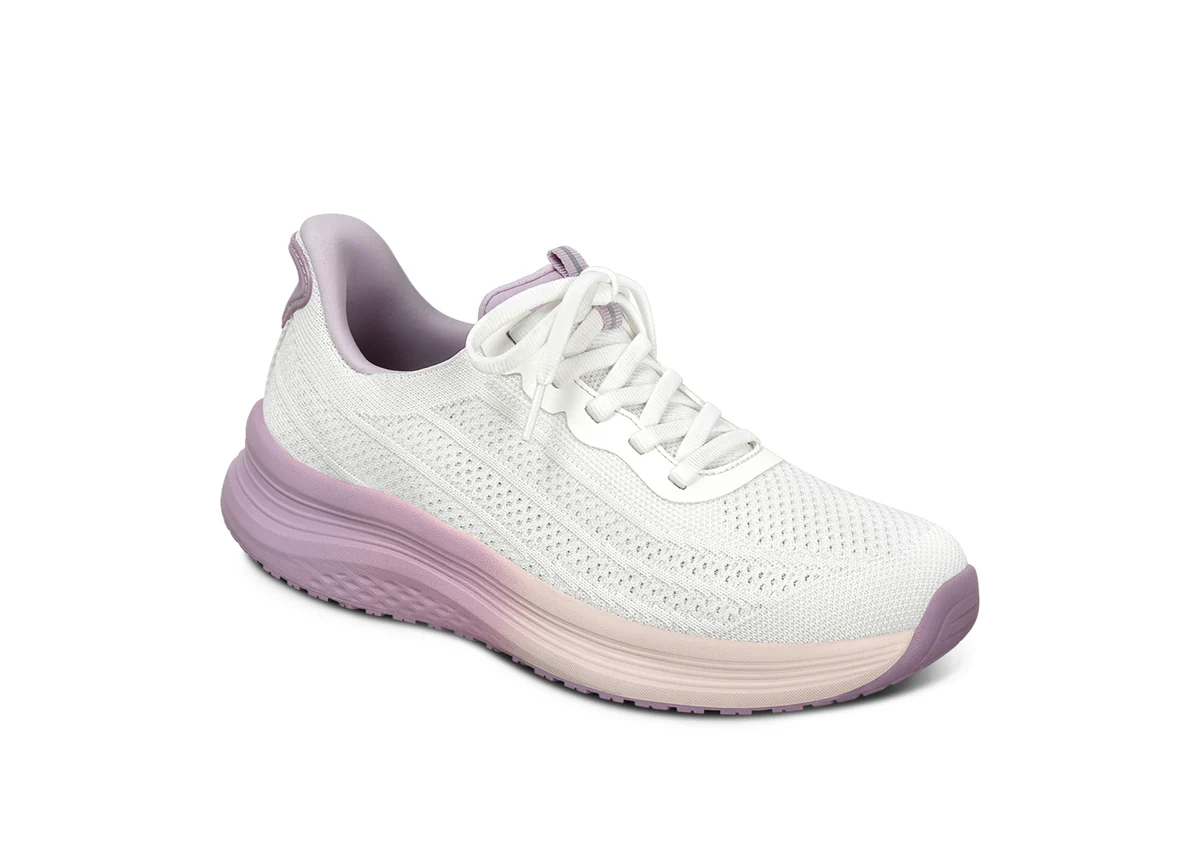
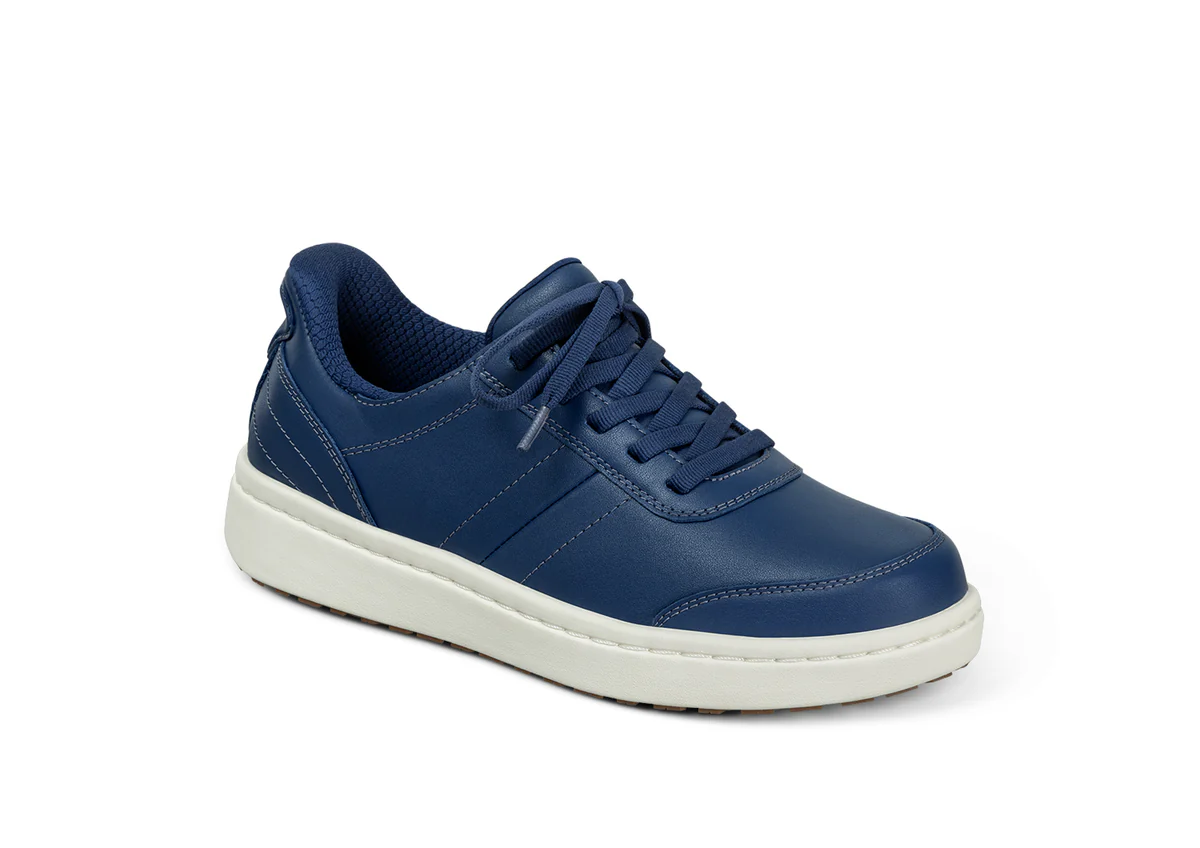
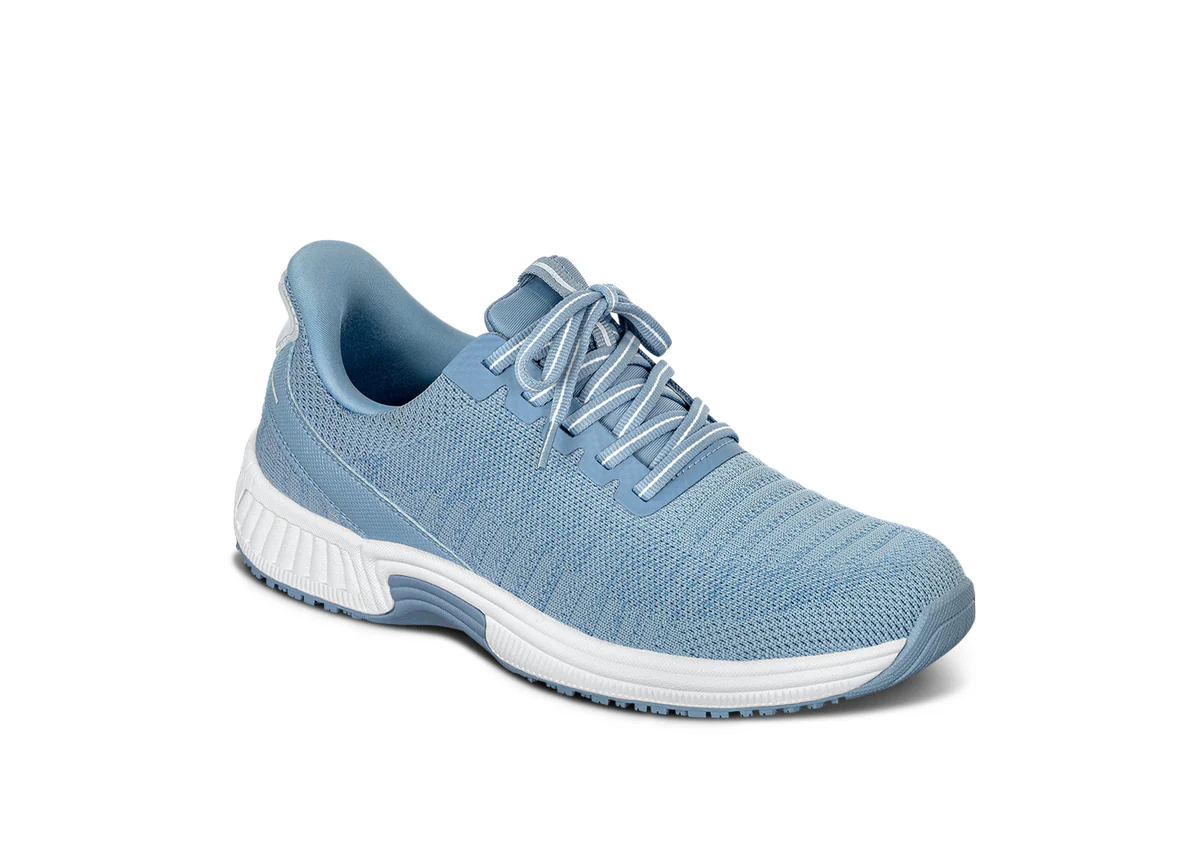
Orthofeet integrates orthotic-level arch support, heel stability, and forefoot cushioning into the shoe construction itself, helping to reduce strain on the feet, knees, and lower back. Their approach eliminates the need for separate orthotic inserts by building therapeutic support directly into each shoe’s architecture. Additionally, they know one size doesn’t fit all, so included arch boosters and fitting spacers, which come in two thicknesses, ensure a customized fit for every foot.
Hoka’s athletic engineering approach centers on maximizing cushioning for performance running. Their walking-specific models incorporate Meta-Rocker technology and H-Frame construction designed to optimize athletic gait patterns and forward momentum during activity.
Brooks integrates their GuideRails system into running and walking models to help active users maintain their natural stride pattern. Their BioMoGo DNA cushioning adapts to individual movement through responsive foam technology designed for athletic performance.
New Balance employs varying engineering approaches across its walking line, from Fresh Foam cushioning systems to ABZORB shock absorption technology. Their construction quality varies significantly by model and price point.
Skechers focuses primarily on memory foam cushioning systems rather than structured biomechanical support, prioritizing immediate comfort over corrective engineering principles.
Convenience and Daily Usability
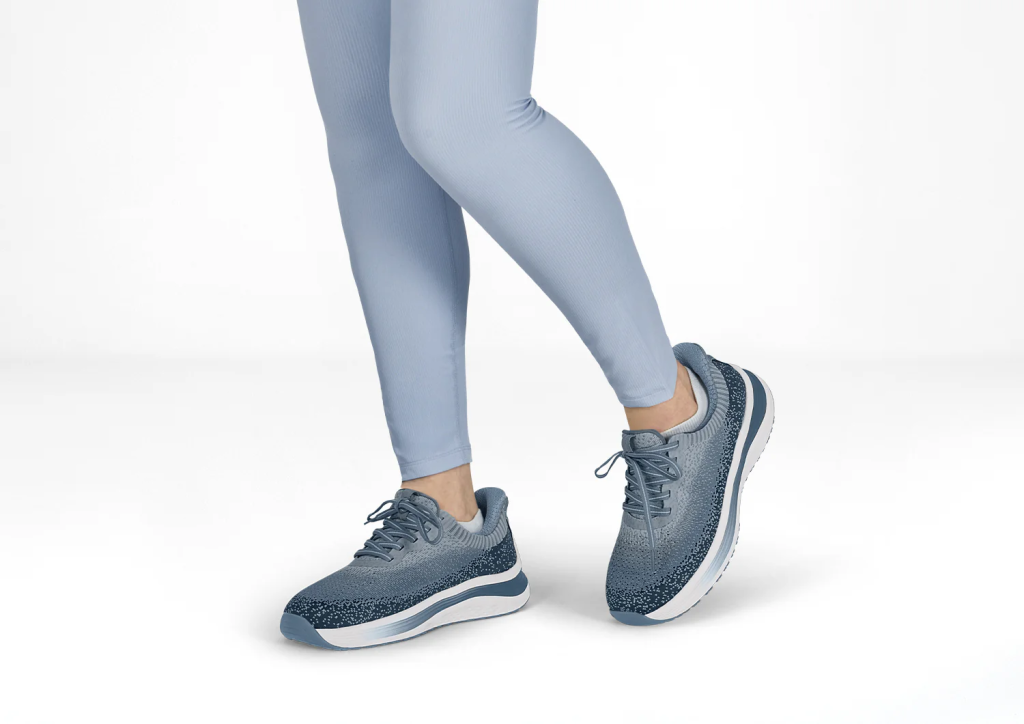
Modern life demands shoes that work with your routine, not against it. The most immediately noticeable difference lies in daily convenience and ease of use. While most brands stick with traditional lacing systems, Orthofeet has engineered multiple hands-free options across its women’s walking line.
For women managing mobility limitations, arthritis symptoms, or simply juggling morning routines, the elimination of bending and tying represents a genuine accessibility improvement. Their slip-on designs maintain secure foot positioning through strategic elastic panels and anatomically shaped entry points.
Hoka maintains traditional lacing systems across its walking shoe line, though its focus on maximal cushioning creates a more forgiving fit tolerance once properly secured. The Gaviota series requires daily lacing adjustments for optimal performance.
Brooks and New Balance similarly rely on traditional lacing systems, focusing their products on support technologies rather than convenience features. Both brands require daily tying and adjustment routines.
Skechers offers the most slip-on walking options among the athletic brands, with their GO WALK collection featuring easy-entry designs. However, these typically prioritize casual comfort over the secure positioning needed for extended walking activities.
Credibility and Professional Endorsement
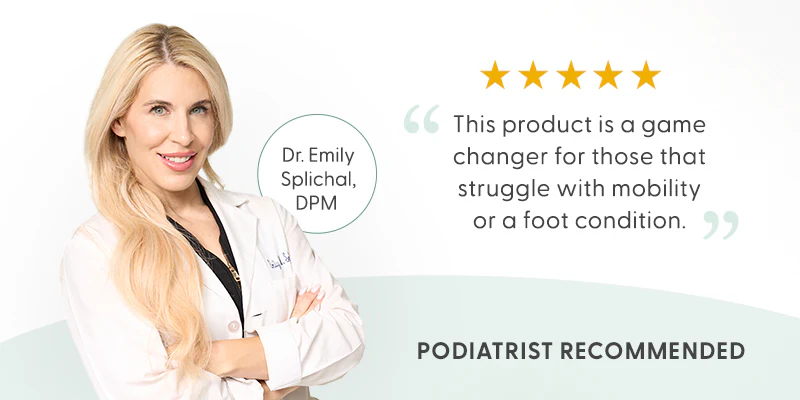
The depth of medical professional involvement and credibility varies significantly across brands.
Orthofeet maintains relationships with practicing podiatrists and biomechanical specialists who consult on product development and recommend specific models for patient conditions. Their therapeutic approach is backed by peer-reviewed clinical research from leading institutions including Baylor College of Medicine and the University of North Carolina at Chapel Hill, demonstrating significant reductions in foot pain and improvements in balance and stability for older adults.
Hoka receives general endorsements from athletic professionals, particularly in the running community, but lacks the targeted medical positioning of therapeutic brands.
Brooks has powerful endorsements from sports medicine professionals due to their biomechanical research and gait-correction technologies. Their GuideRails system receives recognition from movement specialists.
New Balance garners endorsements from fitness professionals and some podiatrists for their stability-focused models, though these tend to be broader recommendations rather than condition-specific guidance.
Skechers has limited medical professional endorsements, focusing primarily on comfort testimonials rather than clinical backing or therapeutic positioning.
Financial Accessibility and Value Protection
Healthcare spending accounts and trial periods can significantly impact the total cost and risk of supportive footwear purchases.
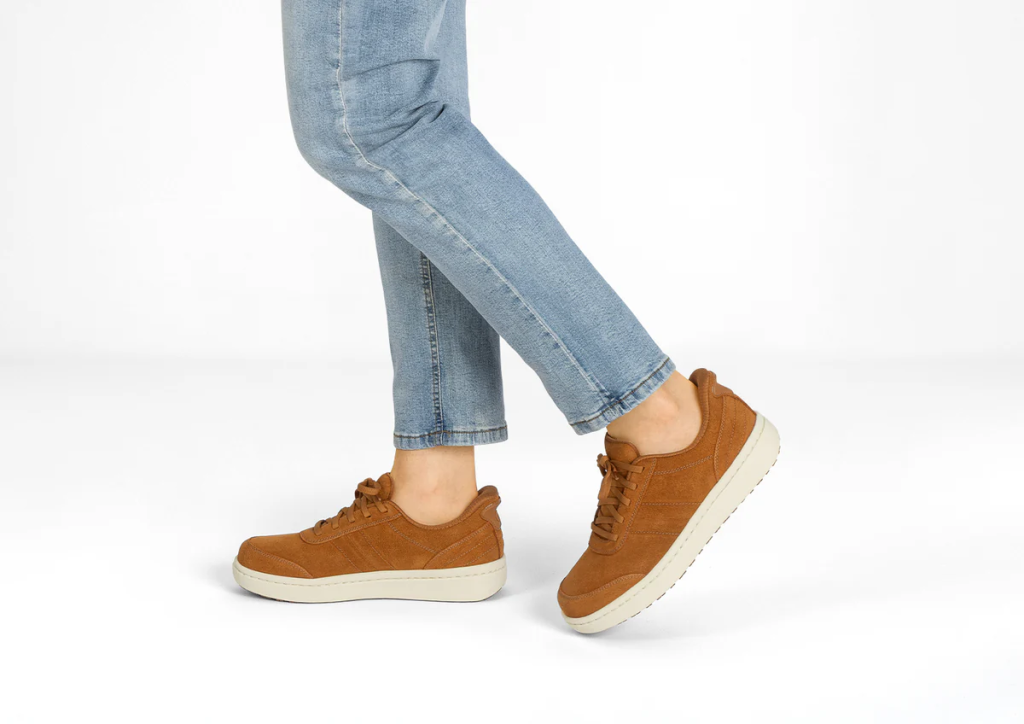
Orthofeet products qualify for HSA/FSA reimbursement when prescribed or recommended for specific medical conditions, potentially reducing effective costs significantly depending on your tax bracket and plan structure. They provide a 60-day wear guarantee with free return shipping.
Hoka and New Balance both limit trials to 30 days and are classified as standard athletic footwear, not eligible for healthcare spending account benefits. However, both brands often provide competitive pricing within the athletic shoe category.
Brooks offers the most generous athletic shoe guarantee at 90 days through their “Run Happy Promise,” reflecting strong confidence in long-term comfort and performance. This industry-leading trial period provides excellent value protection, though their shoes don’t qualify for healthcare spending accounts.
Skechers offers a 45-day return policy and typically provides the most budget-friendly upfront pricing among the brands evaluated, making them initially accessible to cost-conscious consumers, though shorter product lifespan may increase long-term replacement costs.
The distinction between therapeutic positioning and athletic footwear creates different value propositions: immediate affordability versus potential long-term healthcare savings.
Real-World Performance and Customer Satisfaction
Customer reviews and real-world performance data reveal how these shoes actually perform beyond marketing promises. The most telling metrics come from users with demanding daily use scenarios and various foot comfort needs.
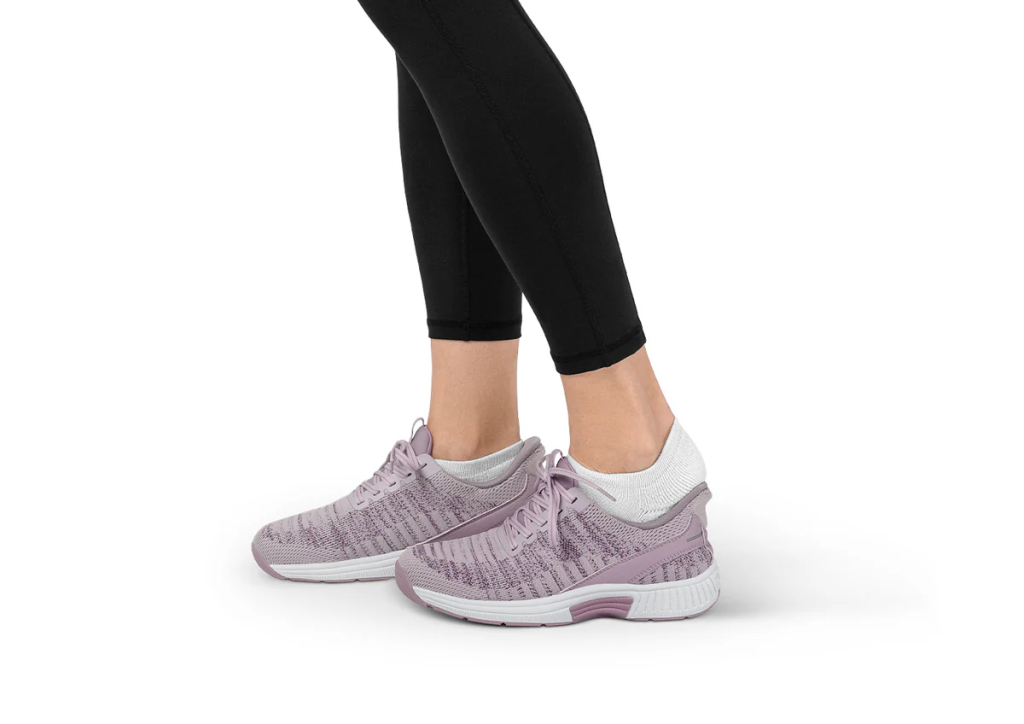
Orthofeet consistently receives high ratings from customers dealing with specific foot conditions. Clinical studies demonstrate a 25% reduction in foot pain and participants walking nearly 700 more daily steps, with study participants reporting smoother movement and greater stability during extended wear. Their 60-day trial period allows for comprehensive real-world testing.
Hoka maintains exceptionally high customer satisfaction ratings, particularly among users who prioritize maximum cushioning and impact protection. Their unique rocker technology creates devoted customers who appreciate the forward-rolling motion, though some users find the curved design takes adjustment or feels unnatural compared to traditional footwear.
Brooks earns strong satisfaction scores through consistent performance and their industry-leading 90-day guarantee, which builds customer confidence.
New Balance benefits from strong brand loyalty and appreciation for a variety of widths, although some customers report inconsistent comfort levels across different model lines. The brand’s strength lies in accommodating different foot shapes rather than addressing specific comfort concerns.
Skechers continues to struggle with durability issues and inconsistent construction quality, reflected in lower average ratings despite affordable pricing. Many customers report initial comfort but declining performance over time.
The 5-Point Analysis: Where Each Brand Stands
| Feature | Orthofeet | Hoka | Brooks | New Balance | Skechers |
| Medical Engineering |  |  | | |  |
| Hands-Free Options | |  | | | |
| Financial Accessibility | | | | | |
| Professional Endorsement | | | | | |
| Customer Satisfaction | | | | | |
| Overall Value Score | A+ | B+ | B | B+ | B- |
Across all five evaluation categories, the same pattern emerges. While athletic brands excel in their primary domains, none match Orthofeet when you put support, convenience, and clinical credibility together.
The combination of hands-free technology, HSA/FSA eligibility, extended trial periods, and genuine orthopedic engineering creates unmatched value for women prioritizing foot health alongside daily practicality.
How You Win With the Right Choice
Choosing supportive Orthofeet footwear, designed with medical principles, can enable you to take advantage of:
- Reduced reliance on temporary comfort solutions like gel insoles and comfort products
- Potential HSA/FSA savings of 20–40% on qualifying purchases and plans
- 60-day risk-free evaluation with free returns to test in your actual routine
- Benefits from 10 years of dedicated footwear innovation built on biomedical engineering
Whether you’re seeking technical specifications or all-day ease, the research consistently points to one clear winner among comfortable women’s walking shoes.
For women who refuse to choose between relief, comfort, and style, Orthofeet delivers all three through biomedical engineering principles rather than compromise. The hands-free offering represents the evolution of supportive footwear, combining orthotic support with modern convenience.
Ready to experience the difference that proper foot biomechanics can make in your daily comfort?
*Individual results may vary. HSA/FSA eligibility depends on your specific plan and qualifying medical conditions. Consult your plan administrator and healthcare provider for coverage determination. For persistent foot problems, consult a healthcare professional.


2 Responses
Do ortho feet come in narrow widths
Do any of your lof your ortho feet shoes have the laces ? My ankles are too flexible so I need the support to tighten my foot in the shoe also my heel is very narrow.