Brought to you in collaboration with Orthofeet. We only partner with brands that reflect our values and standards, ensuring content that benefits you.
In this Article
The Problem with “Athletic Comfort”Where Orthopedic Meets Practical
Designed To Go the Distance
Side-by-Side: What Actually Matters
Beyond the Comfort Comparison
The Style Revolution You Haven’t Heard About
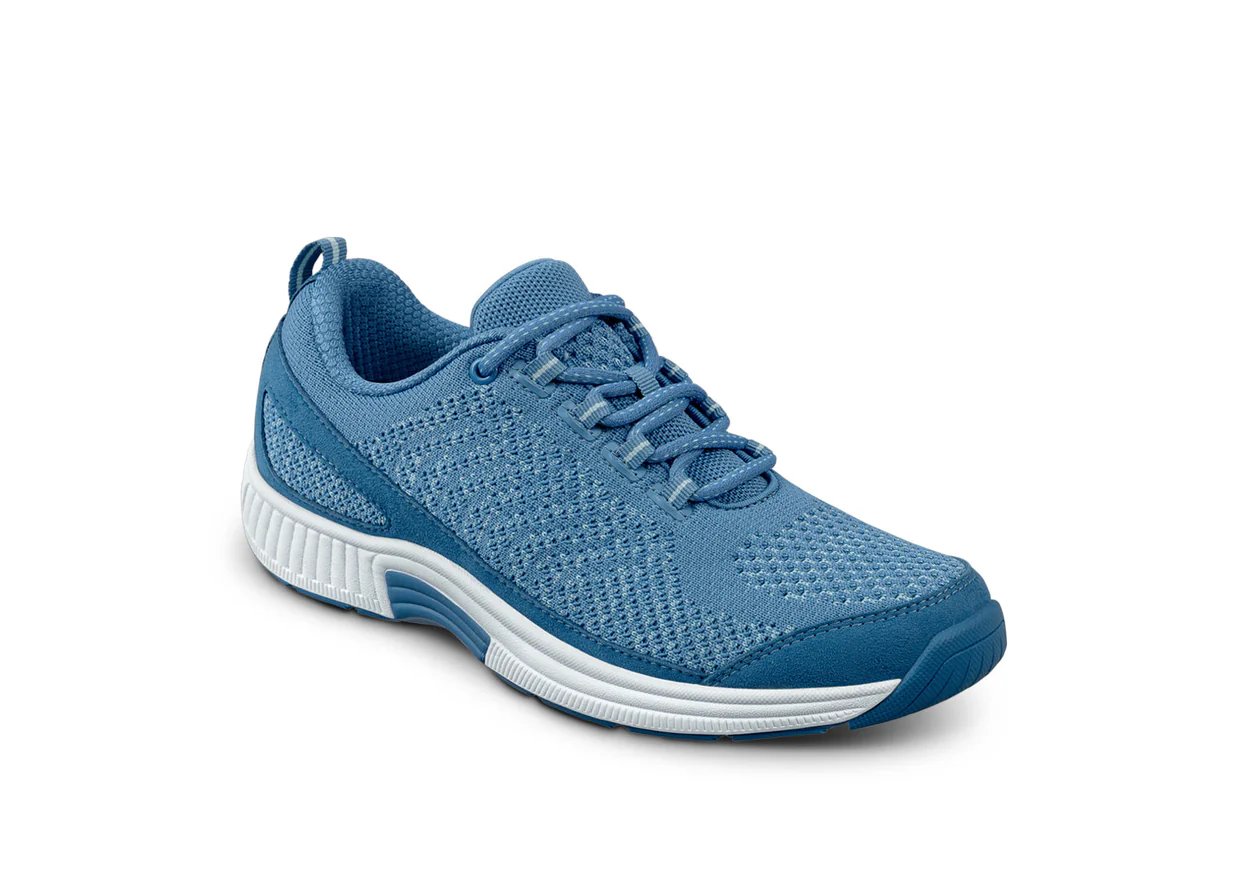
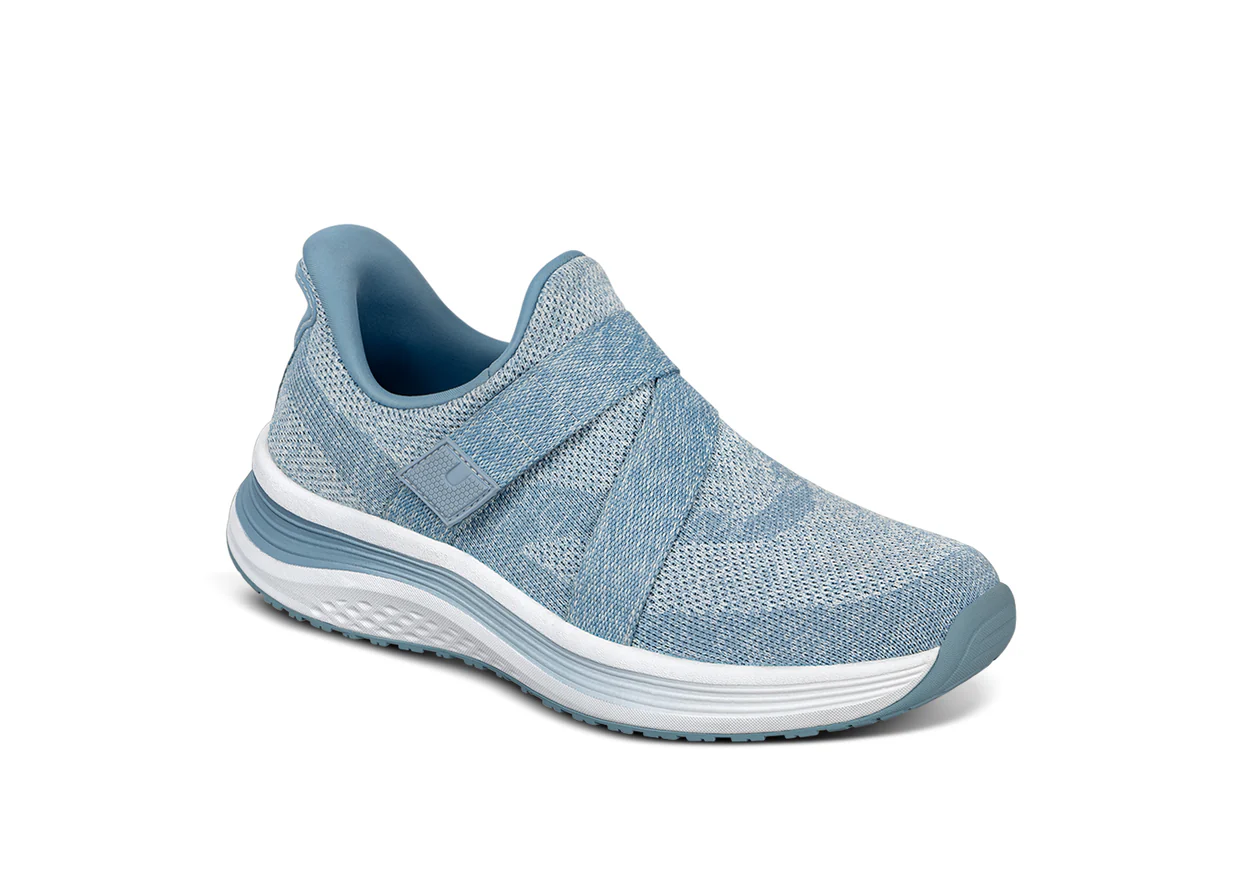
For years, the choice seemed inevitable: athletic shoes that looked good but left you wincing or “comfort” shoes that screamed “medical necessity.” For those of us who are particular about both function and style, finding orthopedic running shoes for women that actually deliver on both seemed impossible.
The Problem with “Athletic Comfort”
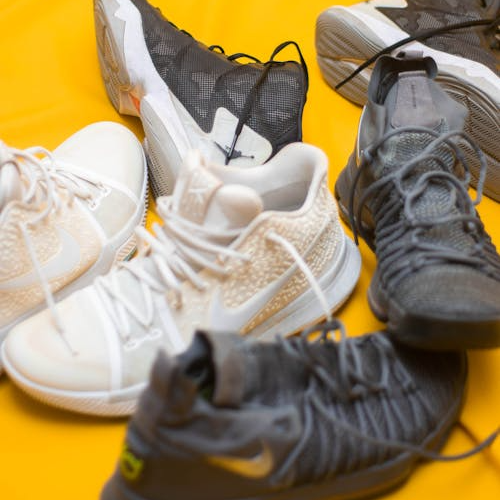
Many people’s closets have more sneakers than they need, but when foot pain starts affecting daily life, suddenly none of those cute options matter.
Months of evaluating every major brand, reading reviews, and talking to women dealing with plantar fasciitis, bunions, and daily foot pain reveal one crucial insight: There’s a massive difference between athletic comfort and therapeutic relief.
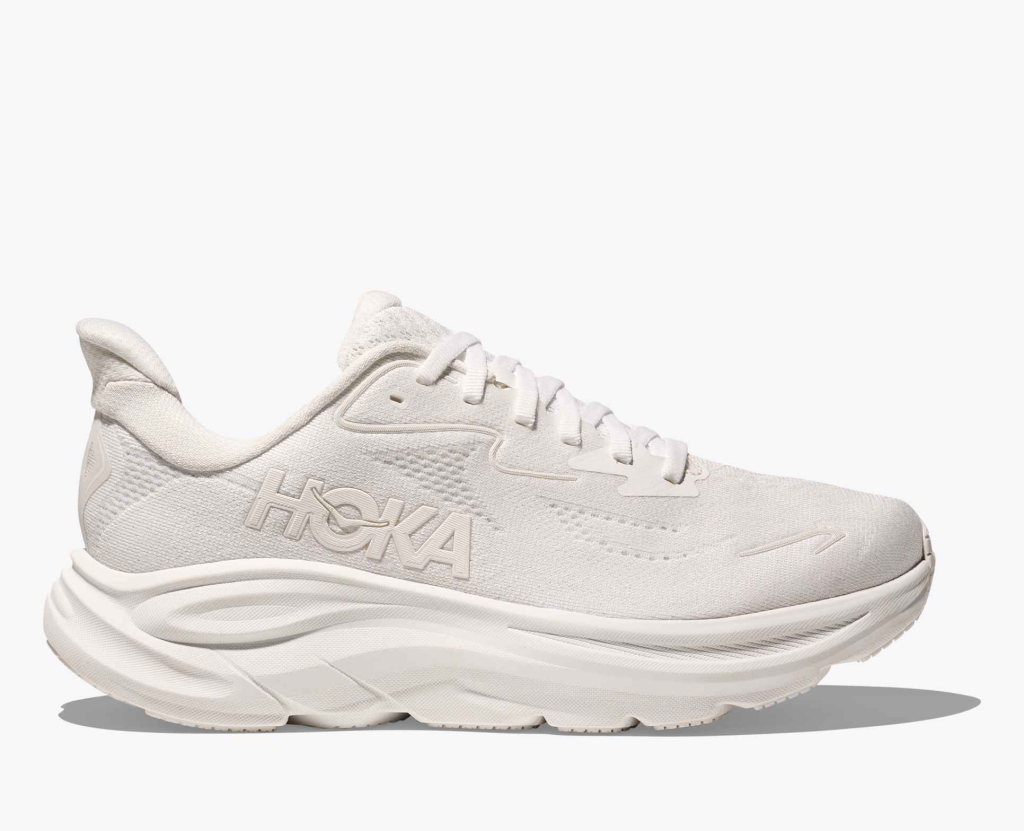
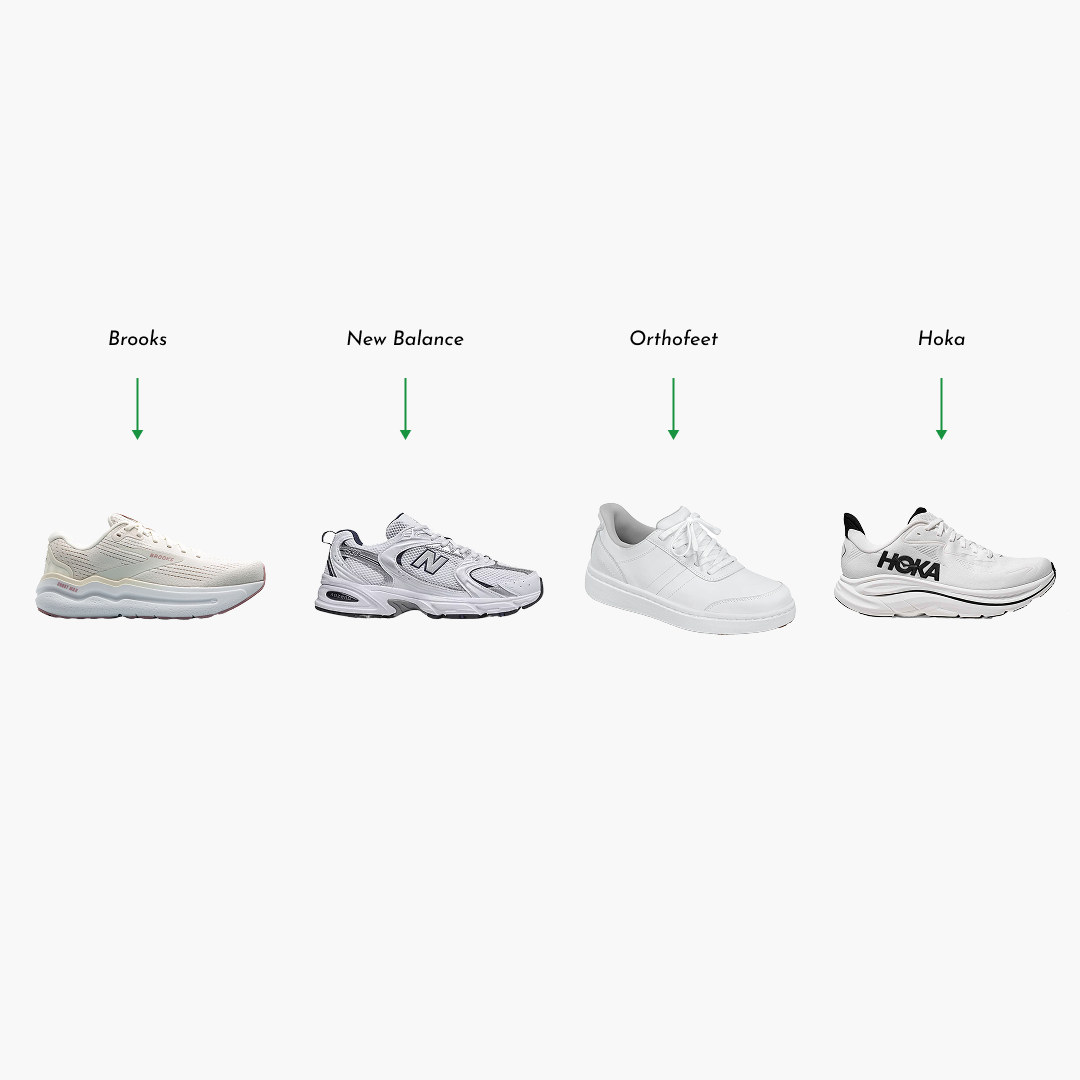
- Hoka builds incredible running shoes with their signature thick midsoles that cushion impact beautifully. Their Clifton series has earned APMA recognition and genuine praise from podiatrists.
However, when you’re dealing with specific conditions like heel pain that radiates through your entire day or bunions that make standard athletic fits torture, that max cushioning alone isn’t enough. It’s like having a luxury car with excellent suspension but the wrong seat dimensions—comfortable until it isn’t. - Brooks takes a different approach with their GuideRails technology, focusing on stability and gait correction. Their Adrenaline GTS line has dominated the stability category for years.
The engineering is solid, the materials are high quality, and they’ve earned their reputation among serious runners. However, stability for athletic performance and accommodation for foot conditions requiring daily relief are two entirely different challenges. Brooks often fails to address the latter. - New Balance delivers exceptional craftsmanship with industry-leading width options, offering everything from narrow (2A) to extra-extra-wide (6E). Most brands stop at wide. Their Fresh Foam X technology provides responsive cushioning that adapts to your stride, and many podiatrists specifically recommend their motion control models.
The quality construction and sizing variety have earned genuine respect among athletes and medical professionals alike. However, even with superior fit options and solid engineering, there’s a fundamental difference between accommodating foot dimensions and providing the therapeutic-grade support and pressure redistribution that chronic conditions require.
Where Orthopedic Meets Practical
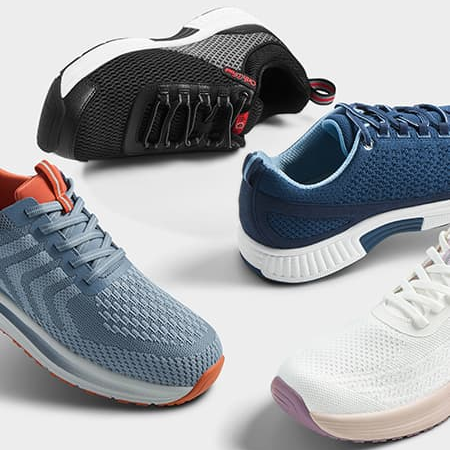
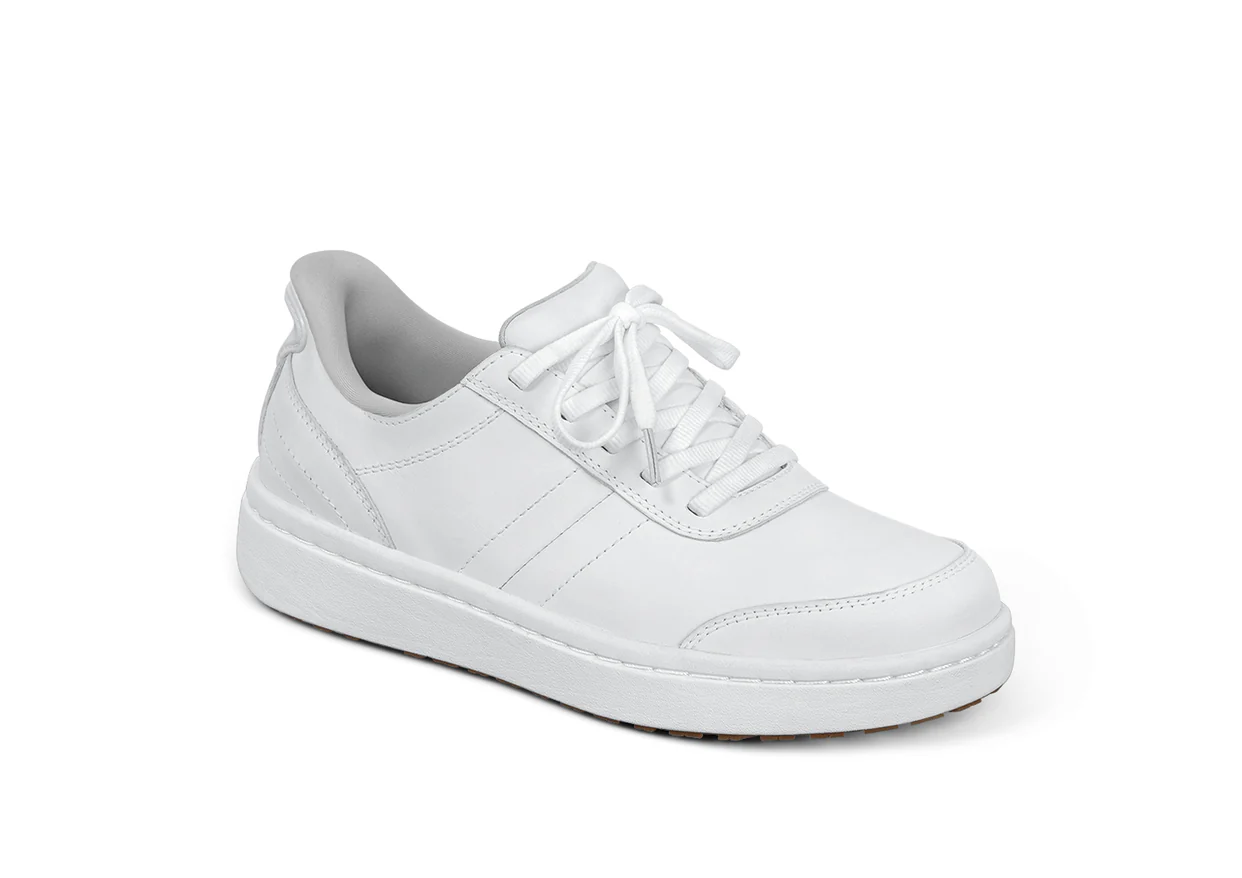
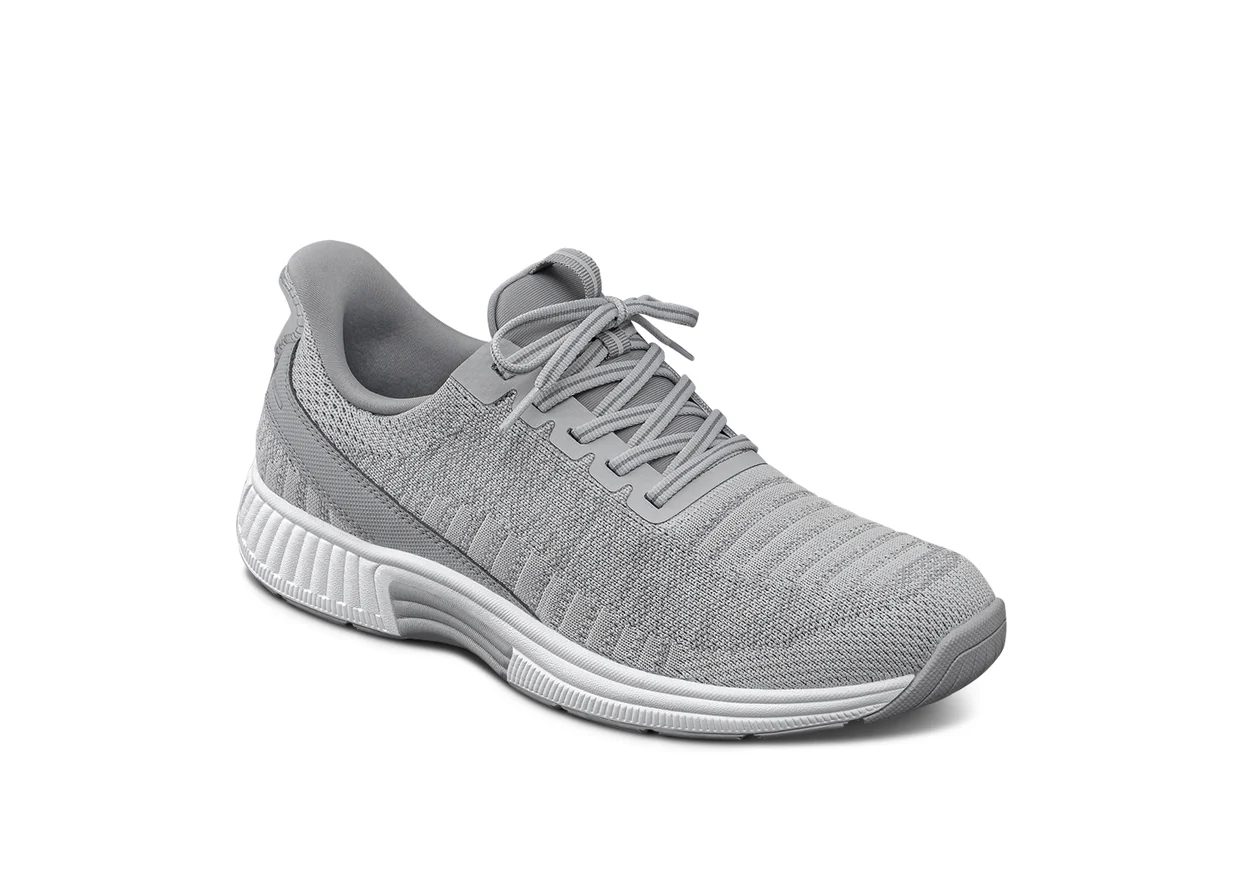
While other brands start with athletic performance and add comfort features, Orthofeet begins with a simple question: “How do we stop feet from hurting?” Every component, from the slip-resistant outsoles to the seam-free interiors, is developed by podiatrists and biomechanical engineers to address real problems that people with foot conditions face every single day.
The Ortho-Cushion™ System isn’t just marketing speak for “extra padding.” It’s engineered arch support that actually redistributes pressure, heel-pain relief that targets the source rather than masking symptoms, and walking sole technology that helps rather than fights your natural gait. When you need orthopedic running shoes for women that transition seamlessly from morning workouts to full workdays, this targeted engineering makes all the difference.
But what’s most impressive? Orthofeet solved the accommodation challenge that mainstream athletic brands still struggle with: Their wide toe boxes give bunions actual breathing room, their stretchable uppers adapt to daily swelling rather than restricting it, and their removable spacers let you customize the depth for orthotics or simply provide extra comfort. These aren’t afterthoughts; they’re core design elements.
Designed To Go the Distance
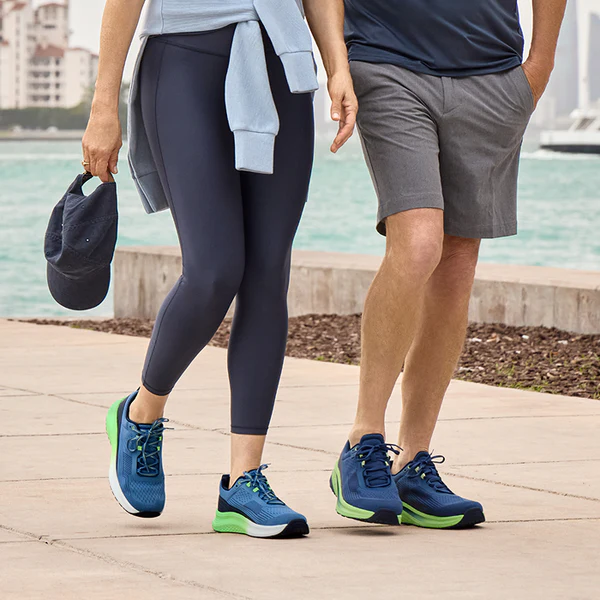
When it comes to running shoes, the difference between gym comfort and street comfort is crucial. Hoka’s cushioning works beautifully for shorter activities. Brooks’ stability provides reassurance during runs. New Balance offers dependable, general comfort for typical daily activities.
But Orthofeet delivers something different entirely, the kind of relief that lets you forget about your feet, even during long runs. These shoes don’t just provide comfort; they actively help address the root causes of foot discomfort while looking good enough that style isn’t a sacrifice.
Healthcare professionals trust the brand because the design philosophy starts with foot biomechanics rather than athletic performance metrics. When your priorities include managing conditions like diabetes, neuropathy, or chronic heel pain, this approach could be the difference between a temporary fix and a long-term solution.
Side-by-Side Comparison: What Actually Matters
| Orthofeet | Hoka | Brooks | New Balance | |
|---|---|---|---|---|
| Primary Focus | Therapeutic pain relief | Athletic performance | Running stability | General athletic comfort |
| Width Options | 5 options A to XX-wide | 2 options B, D | 4 options 2A to 2E | 5 options 2A to 6E |
| Built-in Orthotics |  |  | | |
| Customization Components | Multiple spacers + arch support | Limited | Limited | Limited |
| Medical Endorsements | Podiatrist recommended | APMA Seal (Clifton) | APMA approved models | APMA Seal (1080v13) |
| Insurance Eligibility | HSA/FSA eligible | Not typically | Medicare PDAC (GTS) | Not typically |
| Trial Period | 60 days | 30 days | 90 days | 45 days |
| Price Range | $130–$170 | $109–$145 | $140 | $139–$165 |
| Specific Conditions Addressed | 20+ foot conditions | General cushioning | Overpronation, stability | General comfort |
| Designed for All-Day Wear | | | | |
Beyond the Comfort Comparison
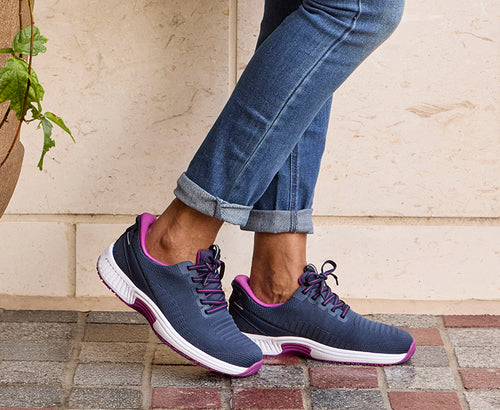
The question isn’t which athletic brand offers the best comfort features. The real question is which brand actually understands the difference between athletic comfort and therapeutic support. This distinction matters more than most people realize.
- Hoka cushions impact brilliantly.
- Brooks will engineer your stride for optimal performance.
- New Balance builds reliable, well-constructed running shoes.
- Orthofeet engineers relief without compromising on style or versatility.
Sure, wearing the right running shoes can make or break your experience with foot pain. But where does that leave the fashionistas out here who want to keep our feet pain-free without sacrificing our style?
The Style Revolution You Haven’t Heard About
Many of us remember our grandmothers’ so-called “sensible shoes,” often thick, beige, and all function, no style. Back then, comfort meant sacrificing vanity, and orthopedic shoes carried a certain reputation.
What completely shifts this perspective is discovering that Orthofeet has cracked the code by creating stylish athletic shoes that deliver therapeutic benefits. Their design philosophy challenges the assumption that you have to broadcast your foot problems to get relief.
The silhouettes are clean and contemporary, the color options actually complement different outfits, and, most importantly, nobody assumes they’re “medical shoes” unless the conversation turns to comfort, which, let’s be honest, happens more often as we get older.
For those searching for orthopedic running shoes for women, not having to choose between looking good and feeling good changes everything. Finding footwear that works with your body instead of against it changes everything. When those shoes also look like something you’d choose regardless of foot problems, “comfortable enough” goes right out the window. Why not start and finish your run on the right foot?