

Brought to you in collaboration with Sans. We only partner with brands that reflect our values and standards, ensuring content that benefits you.
In this Article
What Are Microplastics, and Where Do They Come From?Why Microplastics Are Dangerous
How to Remove Harmful Microplastics from Your Drinking Water
How to Avoid Microplastics in Water
FAQs
According to the World Health Organization (WHO), microplastics have been found in 93% of bottled water and 94% of U.S. tap water samples. Today, those particles are in your drinking glasses, your coffee pot, and maybe even your favorite reusable bottle.
Often too small to see with the naked eye, microplastics in water might not be too small to matter for your health, as scientists have already linked them to inflammation, hormone disruption, and even changes to gut bacteria. That’s enough to make anyone rethink what “clean water” really means.
How can you protect yourself without installing a lab in your kitchen? We’ll show you six ways to avoid microplastics in water, and you can decide which is the best fit for your family.
What Are Microplastics, and Where Do They Come From?
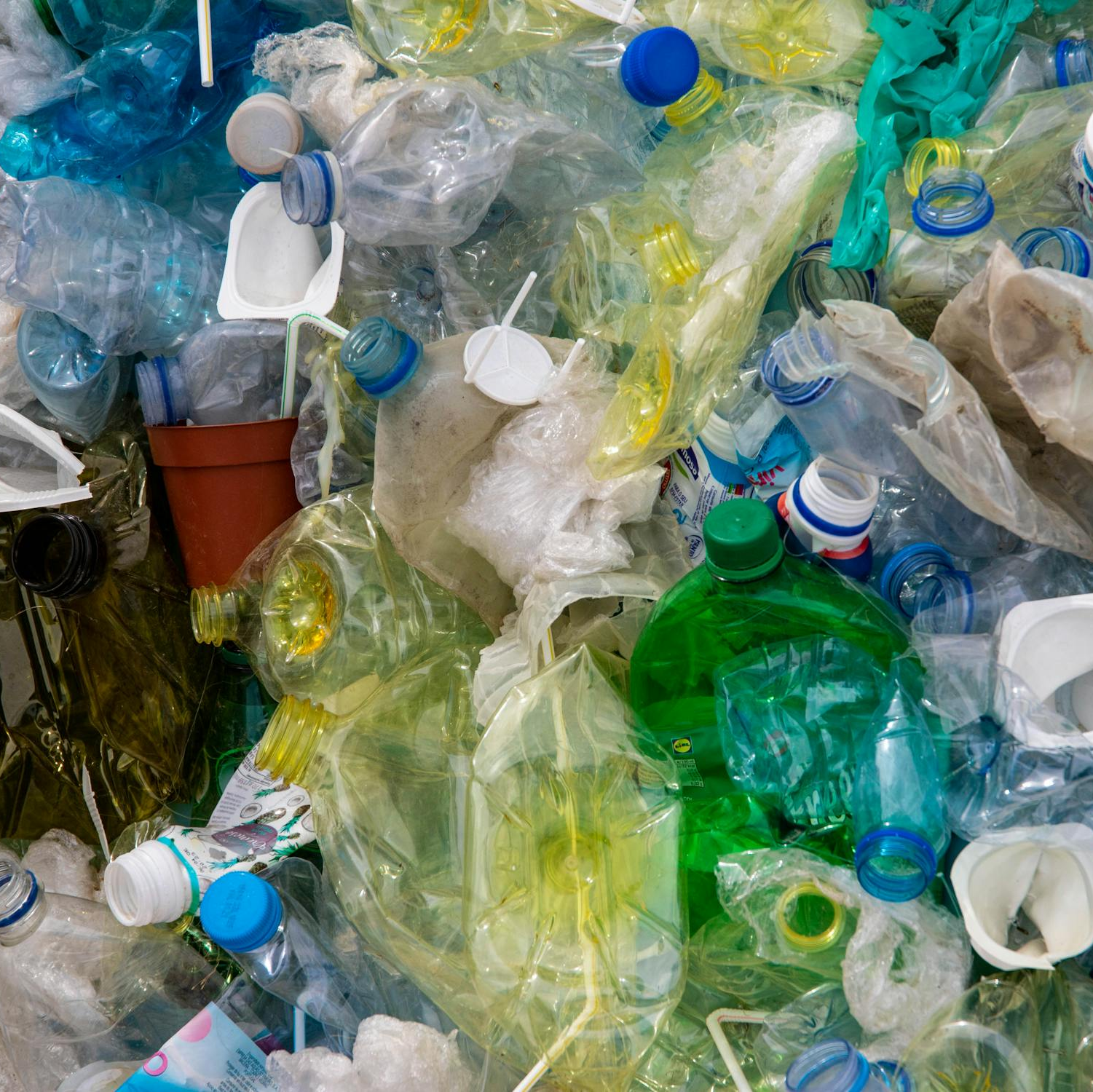
All plastic particles less than 5 millimeters long are considered microplastics, so anything the size of a sesame seed or smaller. Many are so small that they can only be seen through a microscope. Some are intentionally made that way, like microbeads in old cosmetic products. Others come from larger plastic items that break down over time, like water bottles, food containers, car tires, and synthetic clothing.
You’ll find them almost everywhere: in oceans, rivers, soil, and even the air. When you wash synthetic fabrics, tiny fibers can shed and slip through wastewater treatment plants. Car tires leave behind plastic dust on the road that gets washed into storm drains. Even plastic packaging can shed particles just from wear and tear.

Why Microplastics Are Dangerous
We can’t always see them, but microplastics may still affect our health. We drink, eat, inhale, and absorb them through skin contact. Scientists have already found plastic particles in human lungs, liver, kidneys, and placenta, with a recent study identifying microplastics in brain tissue having increased by 50% over the past eight years.
The fact that plastics can carry chemicals like BPA or phthalates poses a growing concern that they might act as carriers for toxic substances. So far, the toxicity research on microplastics shows that exposure “will cause intestinal injury, liver infection, flora imbalance, lipid accumulation, and then lead to metabolic disorder.”
How to Remove Harmful Microplastics from Your Drinking Water
From good old pitcher filters to highly performative reverse osmosis, there is a water filtering method suitable for your home, but what are their pros and cons?
1. Pitcher Filters
While portable and easy to use, with no installation required, only some high-end water pitcher models are built to remove microplastics from water. Even then, they are generally less effective than multi-stage or reverse osmosis.
2. Faucet-Mounted Filters
You can buy filters that you attach to your taps to filter water on demand. They’re quite accessible, affordable, and easy to install, but not all faucet-mounted filters can help you avoid microplastics—or any fine particles, for that matter—in your water. You’ll need to check the specs carefully and replace the filter often to keep it working. Just be aware that it may reduce your water pressure.
3. Refrigerator Filters
Fridge filters primarily focus on chlorine and basic sediment. They’re fine for taste and odor, but most haven’t been tested for microplastics. Some advanced filters, like Hydroviv, use multi-stage filtration and claim to remove microplastics along with other contaminants such as lead, arsenic, PFAS, and VOCs. However, as a rule of thumb, if the manufacturer doesn’t say what the filter can remove, assume it won’t cover much.
4. Gravity Filters
Gravity filters use dense media to strain out larger contaminants. Some brands, like Berkey or ProOne, claim to reduce plastic particles, but gravity filters are unlikely to catch tiny ones unless the filter is sub-micron. They also take up space and work slowly.
5. Distillation
Distillers boil water and collect the steam, leaving solids behind as waste. This is one of the more reliable, chemical-free ways to remove microplastics in water. Still, it takes a long time, uses loads of electricity, and removes minerals along with everything else, leaving you with a flat taste.
6. Reverse Osmosis (RO)
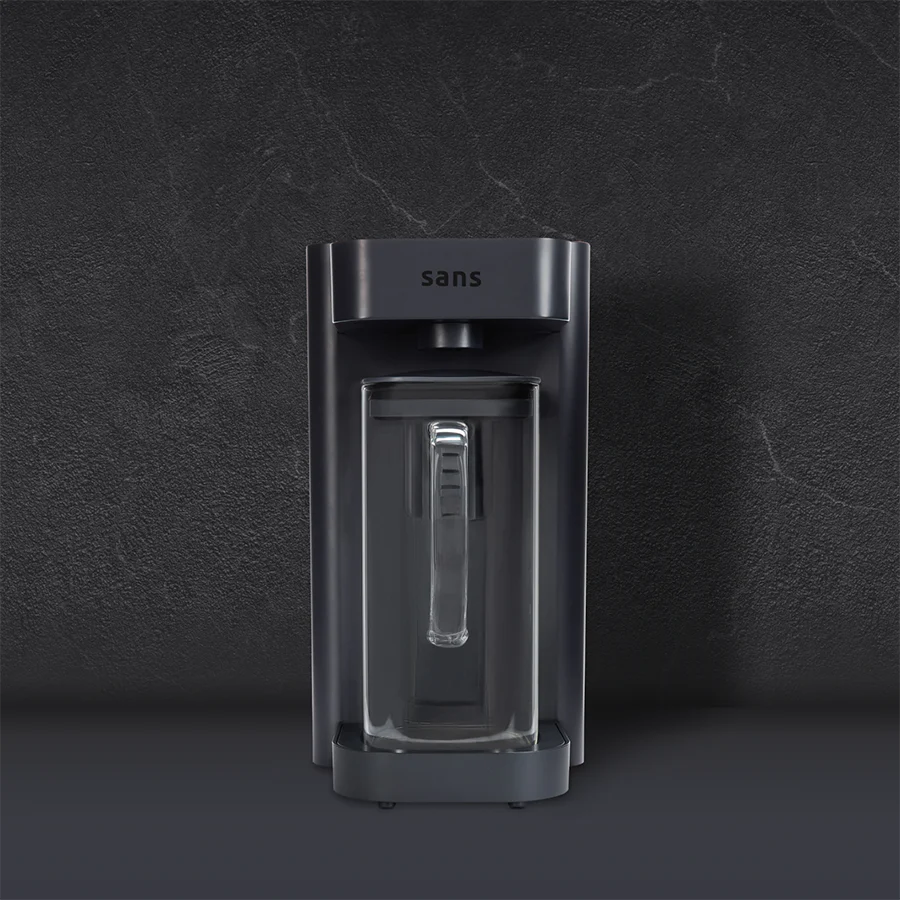
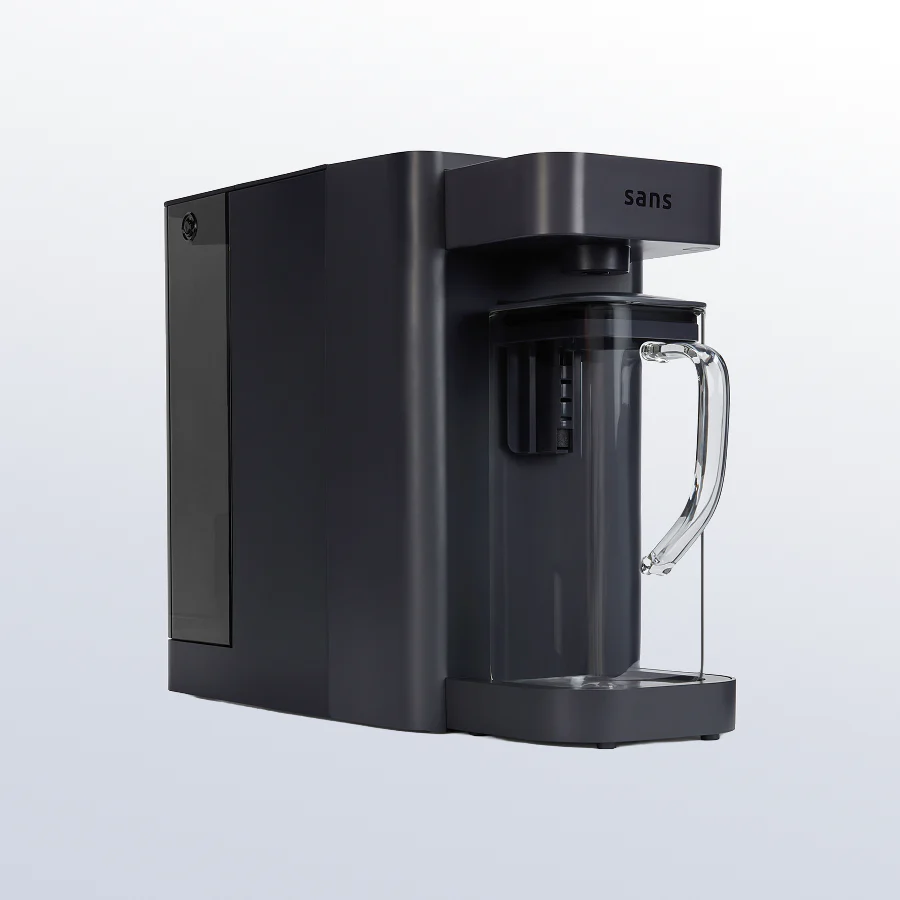
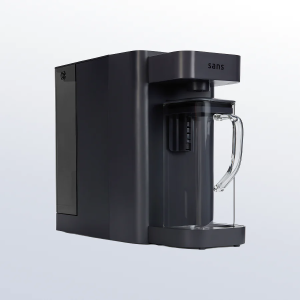
Reverse osmosis systems push water through a fine membrane that blocks nearly everything, including microplastics and PFAS. One example that stands out is the Sans Water Purifier, which combines a 4-stage RO filter with activated carbon, UV-C light, and an optional mineral and pH filter. It’s third-party tested, gives you instant hot water, and comes with a glass pitcher that fills itself. Sleek and compact, it fits nicely on the counter, which makes it easier to live with than most setups.
How to Avoid Microplastics in Water
Microplastics in water aren’t going away anytime soon. Researchers are still studying their long-term impact, but what we know so far is reason enough to stay alert. Filtering your water and reducing plastic waste are simple steps that can make a difference.
The Sans Water Purifier offers a straightforward solution: advanced reverse osmosis in a setup that doesn’t need tools or plumbing. It comes with a 30-day risk-free trial, a 3-year warranty, and free returns.
Frequently Asked Questions
A proven reverse osmosis system is the best option for avoiding microplastics in water. The Sans Water Purifier combines a four-stage filter with activated carbon, a UV-C light, and an optional pH and mineral filter.
More research must be done, but recent studies link microplastics to inflammation, hormone issues, gut imbalances, and more. To avoid microplastics in your water, consider a reverse osmosis water purifier.
Generally, faucet filters are only effective if rated below one micron. Most faucet filters aren’t made for this level of filtration. A reverse osmosis filter, like the Sans Water Purifier, would be more effective.
Bottled water typically contains more microplastics than tap water! The key to avoiding them is to filter them out using a filtration system made for the job. Consider a reverse osmosis system like the Sans Water Purifier.




2 Responses
I order distilled bottled water, and I have felt in better health since I did that.
Our gpg hardness is 15. Will Sans filter still work for us?